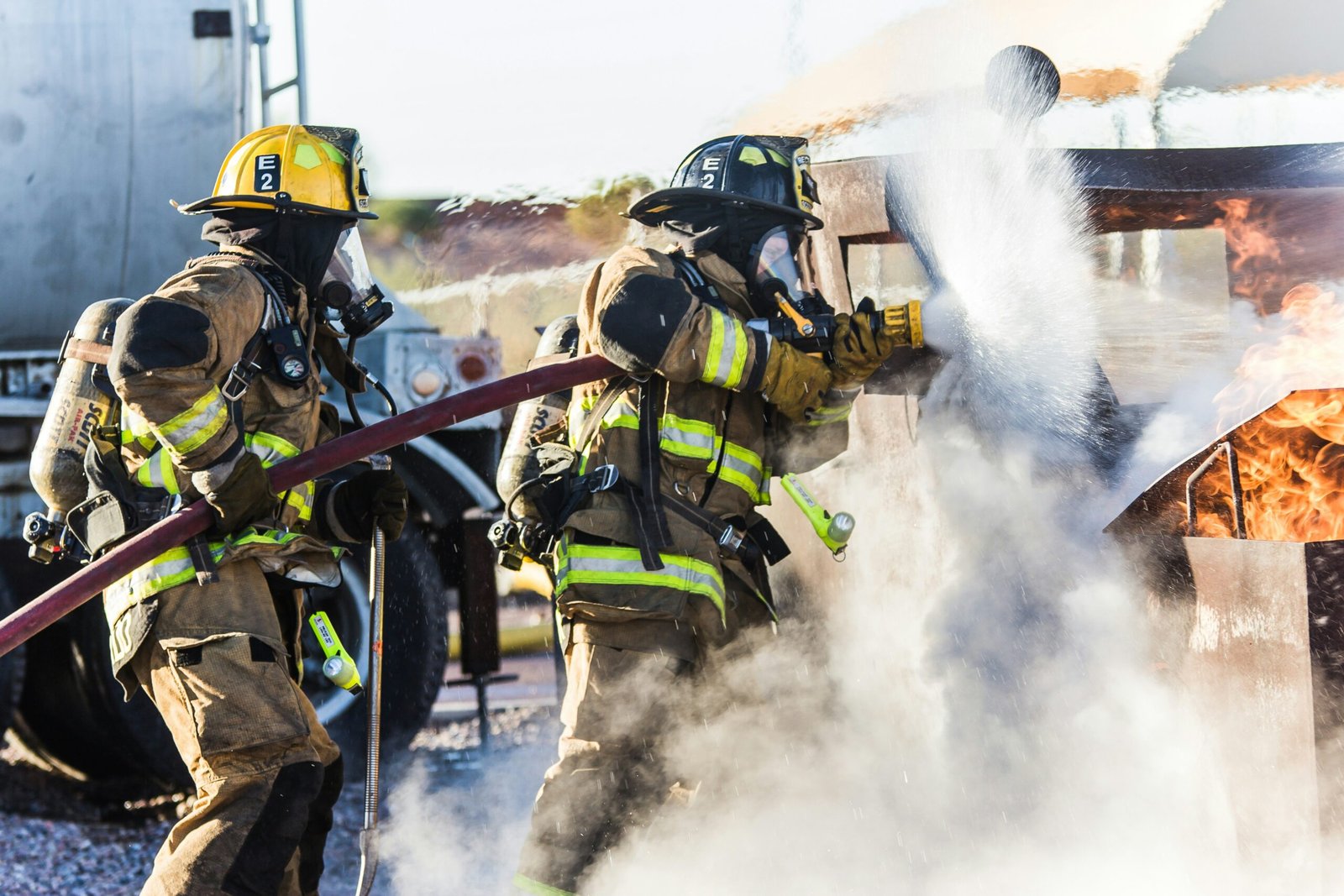
When a fire emergency call is received, a fire tender team must move from readiness to action in minutes. The crew’s response involves receiving reliable information, selecting resources, checking personal protective equipment (PPE), approaching safely, assessing the incident, rescuing people where possible, and choosing the correct firefighting method.
1. What happens when the emergency call is received?
The control room or fire station gathers the caller’s location, type of emergency, visible smoke or flames, people trapped or injured, nearby hazards, and a callback number if available. The information is passed to the officer in charge and responding crew. If the situation is unclear, dispatchers may seek additional details while the response is being mobilised.
- Confirm the location: site name, gate, building, road access and the best entry point.
- Identify the incident: building, vehicle, electrical, industrial, flammable-liquid, gas, or other fire; note any reported explosion or hazardous materials.
- Choose resources: send an appropriate fire tender, crew and any additional specialist support required by local procedures.
- Alert the crew: communicate known risks, access instructions and any information about trapped people.
2. How firefighters prepare before leaving the station
Firefighters train and prepare before an incident occurs. When a call comes in, they follow the station’s mobilisation procedure and put on the PPE required for the expected hazards. Correct equipment, communication and accountability are essential.
- Protective clothing: fire-resistant turnout clothing, helmet, gloves, suitable boots and a protective hood, as required for the task.
- Breathing protection: self-contained breathing apparatus (SCBA) for environments where smoke, toxic gases or oxygen deficiency may be present, used by trained personnel under procedure.
- Buddy and accountability checks: confirm crew members, equipment readiness, radio operation and assigned roles.
- Vehicle readiness: check the fire tender, pump, water supply, hoses, couplings, ladders, lights, warning devices and other equipment according to the station checklist.
- Briefing: the officer in charge shares available incident details and reminds the team of likely hazards and initial responsibilities.
3. Fire tender equipment and what it is used for
The exact equipment varies with the fire tender, site risks and local fire service. Common equipment includes:
- Water tank, pump and hoses: supply and deliver water through suitable hose lines and branches for fires where water is appropriate.
- Foam equipment: proportioning systems, foam concentrate and applicators for certain flammable-liquid fires, where the agent is suitable and the crew is trained.
- Portable extinguishers: selected according to the fire class and the material burning.
- Breathing apparatus and spare cylinders: support trained firefighters operating in hazardous atmospheres.
- Thermal imaging camera: helps trained crews locate heat sources or people in smoke-affected areas, but does not make an unsafe atmosphere safe.
- Ladders and rescue tools: provide access or support rescue operations when conditions and training permit.
- Forcible-entry and hand tools: such as axes, bars and cutters, used only when appropriate and by trained crew members.
- Lighting, radios and warning devices: support communications, visibility and scene control.
- First-aid and rescue equipment: used to provide initial care and assist evacuation in coordination with medical responders.
- Specialist equipment: gas detectors, spill-control equipment or other resources may be required for industrial, chemical or confined-space incidents.
4. En route to the incident
The driver operates the fire tender according to emergency-driving law, training and service procedures. Warning lights and sirens are used as authorised, but they do not remove the duty to drive with due care. The crew may review the route, discuss access and water-supply options, and request additional resources through dispatch when needed.
5. Arrival: size-up and making the scene safe
On arrival, the officer in charge conducts an initial size-up: what is burning, how far the fire has spread, whether people are missing or trapped, how smoke and heat are moving, and what hazards could affect the crew or public. The team establishes command and communicates its plan according to the incident-management system used by the service.
- Position the tender to preserve safe access, escape routes and room for other emergency vehicles.
- Identify electrical equipment, gas cylinders, fuel stores, chemicals, structural damage and possible explosion hazards.
- Establish exclusion zones and keep unauthorised people away.
- Arrange water supply and hose lines without blocking escape routes or creating avoidable trip hazards.
- Prioritise life safety, rescue where feasible, incident control and property protection in line with the incident plan.
6. How the crew chooses a firefighting method
There is no single extinguishing agent for every fire. The team selects tactics based on the fuel, fire size, electrical and chemical hazards, ventilation, building conditions, available resources and its training. Water can be dangerous on certain metal fires and may create an electrical or chemical hazard; foam is not suitable for every liquid or chemical. The crew follows the relevant fire-service procedures and safety data for known substances.
- Ordinary combustible materials: water may be used when appropriate and safe.
- Flammable liquids: a suitable foam or other approved agent may be selected based on the fuel and circumstances.
- Energised electrical equipment: isolate power where possible and use only an agent and method approved for the situation.
- Gas leaks or pressurised cylinders: control the area, consider escalation or explosion risk, and follow specialist procedures; extinguishing a flame without controlling the fuel supply can increase danger.
- Reactive metals or unknown chemicals: identify the material and use the appropriate specialist response; never assume water is safe.
7. Rescue, communication and team roles
Depending on the incident, crew members may be assigned to command, hose-line operations, water supply, search and rescue, ventilation, exposure protection or medical support. Entry into smoke-filled or structurally compromised areas requires appropriate training, equipment, risk assessment, communications and crew accountability. Firefighters should not enter hazardous areas alone or outside their service’s procedures.
8. After the fire is controlled
When the main fire is controlled, crews check for remaining hot spots and hidden fire where it is safe to do so, monitor for re-ignition, and support ventilation or overhaul under the incident plan. They maintain scene security until the responsible authority permits handover. Equipment is inspected, cleaned or decontaminated as required, cylinders and consumables are replenished, defects are reported, and the crew records the incident and participates in a debrief.
9. Practical readiness checklist for a fire tender team
- Call details and location communicated clearly.
- Correct PPE and breathing apparatus checked for the assigned task.
- Driver, officer and crew roles understood.
- Vehicle, pump, water, hoses, couplings and communications checked.
- Suitable extinguishing agents and specialist resources identified.
- Scene size-up, command, hazards and exclusion zones established.
- Rescue priorities, safe access and crew accountability maintained.
- Equipment restored, defects reported and lessons captured after the incident.
Conclusion
An effective fire response begins before the tender leaves the station. Reliable call information, trained firefighters, suitable PPE, well-maintained equipment, safe driving, a disciplined scene assessment and clear teamwork all contribute to a safer and more effective operation. Every incident is different, so crews must follow their fire service’s standard operating procedures, incident command system and applicable regulations.
Safety note: This article is for general awareness and does not replace professional firefighting training, local emergency procedures or instructions from the incident commander.
Featured image credit: Matt C via Unsplash.