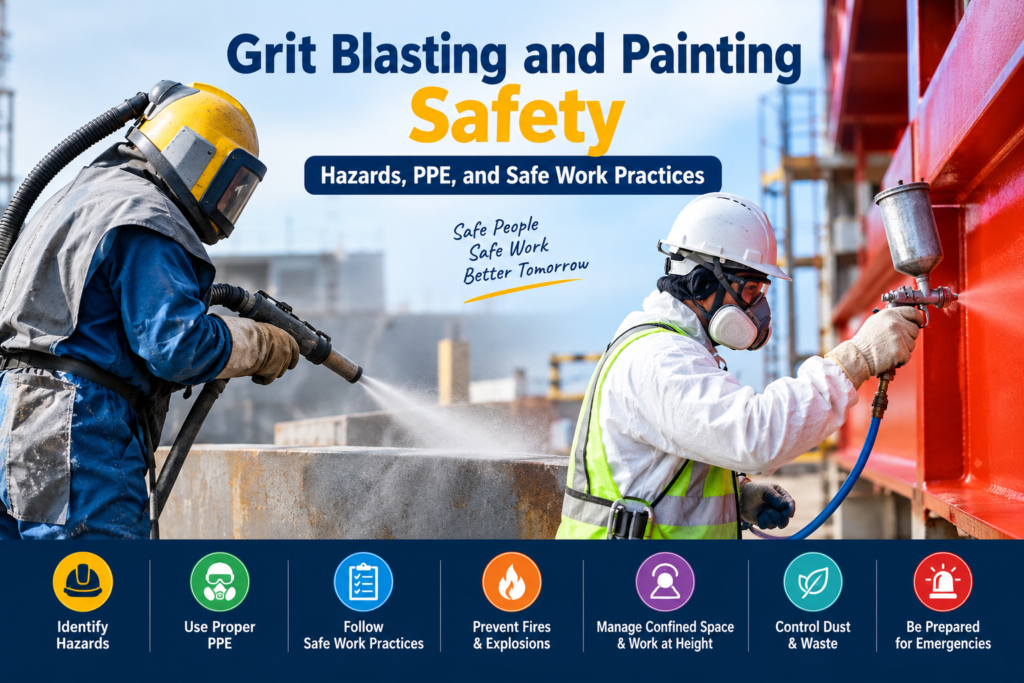

Grit blasting and painting are common surface-preparation and coating activities in fabrication yards, shipyards, workshops, construction projects and industrial plants. They can expose workers to abrasive dust, flying particles, high-pressure equipment, hazardous paint chemicals, flammable vapours, noise and work-at-height risks. A planned job, competent supervision and effective controls are essential to prevent injuries and occupational illness.
This guide outlines practical safety measures for both activities. Always follow the approved job safety analysis (JSA), permit-to-work requirements, equipment manufacturers’ instructions, safety data sheets (SDS) and applicable local regulations for your site.
1. Main hazards in grit blasting and painting
- Dust and respiratory exposure: Abrasive media and removed coatings may create hazardous airborne particles, including silica, lead or other toxic substances depending on the material being blasted.
- Flying abrasive and rebound: Particles can injure eyes and skin, and blasting hoses or couplings can cause serious harm if they fail.
- Noise and vibration: Blasting equipment and compressors may create high noise levels.
- High-pressure hazards: Never point a blasting nozzle at a person or attempt to clear a blockage while the system is pressurised.
- Paint and solvent exposure: Vapours, mists and skin contact can cause irritation or more serious health effects, depending on the product.
- Fire and explosion: Some paints and solvents release flammable vapours. Poor ventilation, ignition sources and static discharge can increase risk.
- Workplace and access hazards: Poor lighting, slippery surfaces, trailing hoses, confined spaces and work at height can lead to falls or other incidents.
2. Pre-job planning and authorisation
Before starting work, the supervisor and work team should:
- Conduct a site-specific risk assessment and toolbox talk covering the sequence of work, hazards, controls and emergency arrangements.
- Obtain the required work permit and any additional authorisations for confined-space entry, work at height, hot work or hazardous-area work, as applicable.
- Inspect the surface and existing coating where possible to identify hazardous substances and determine the appropriate abrasive and waste-handling method.
- Confirm the blasting and painting area, exclusion zone, warning signs, barriers and access controls.
- Check weather and ventilation conditions, especially for outdoor work, enclosed areas and coating application.
- Verify that workers are trained, medically fit where required, competent for their assigned tasks and familiar with the emergency plan.
3. Grit blasting safety precautions
Equipment and work area
- Inspect the blast pot, hoses, couplings, nozzle, deadman control, pressure gauges and compressor before use. Remove defective equipment from service.
- Use correctly rated hoses and secure connections with the specified locking devices and whip checks where required. Never rely on improvised repairs.
- Verify that the deadman control works correctly and that the operator can stop blasting promptly.
- Depressurise and isolate the system before clearing blockages, disconnecting hoses or carrying out maintenance. Follow the site lockout/tagout procedure where applicable.
- Establish an exclusion zone and prevent unauthorised entry. Position the work to protect nearby workers, the public and adjacent equipment from dust and rebound.
- Use suitable dust extraction, containment and ventilation. Select abrasive media based on the risk assessment; do not use silica sand where prohibited, and avoid abrasives that create uncontrolled hazardous dust.
- Collect spent abrasive and removed coating safely. Test or classify waste as required before storage, transport and disposal.
Personal protective equipment (PPE)
Blasting operators need purpose-designed blasting protective clothing, gloves, safety footwear and hearing protection appropriate to the exposure. Eye and face protection must suit the task. Respiratory protection must be selected from the exposure assessment and applicable requirements; abrasive blasting may require a purpose-designed supplied-air blasting respirator. Ordinary dust masks are not a substitute for the required blasting respiratory system. Inspect, maintain and use all protective equipment according to the manufacturer’s instructions.
4. Painting safety precautions
- Read the product label and SDS before mixing or applying paint, thinner, primer or hardener. Follow specified handling, ventilation, PPE, storage and first-aid instructions.
- Provide effective ventilation and monitor the atmosphere when the risk assessment requires it. Never assume an area is safe simply because it looks or smells clear.
- Keep paint and solvent containers closed when not in use. Mix only the amount needed in a designated, suitably ventilated area.
- Eliminate smoking, open flames, sparks and other ignition sources wherever flammable vapours may be present. Use suitable equipment and bonding/grounding controls where required by the risk assessment.
- Use chemical-resistant gloves, protective clothing and eye protection selected for the products. Choose respiratory protection based on the coating, application method, exposure and SDS—not on guesswork.
- For spray painting, control overspray and restrict access to the spray zone. Check hoses, guns, regulators and connections, and never check for leaks with bare hands.
- Store chemicals in labelled, compatible containers with lids secured. Keep incompatible materials separated and provide spill-control materials appropriate to the products.
- Use approved access platforms and fall protection when painting at height. Secure tools and materials and protect people below.
5. Confined spaces and ventilation
Blasting or painting inside tanks, vessels, ducts or other enclosed spaces requires additional controls. Use the site’s confined-space procedure, including entry authorisation, isolation, atmospheric testing, ventilation, communications, an attendant and a suitable rescue plan when applicable. Assess oxygen levels and relevant toxic or flammable contaminants before and during work as required. Respiratory protection does not replace required atmospheric controls or a rescue plan. Do not enter to rescue a colleague without the required training, equipment and authorisation.
6. Housekeeping, waste and emergency readiness
- Route hoses and cables to reduce trip hazards; keep walkways, exits and emergency equipment accessible.
- Clean dust using an appropriate industrial vacuum or other approved method. Avoid dry sweeping or compressed air if it disperses hazardous dust.
- Keep spill kits, suitable fire extinguishers, first-aid supplies and emergency communication available as identified by the risk assessment.
- Know the response for eye or skin exposure, inhalation, fire, chemical spills and equipment failure. Use the SDS first-aid instructions and seek medical help promptly when needed.
- Stop work, isolate equipment when safe to do so, and report defects, near misses and unsafe conditions to the supervisor.
- Dispose of used abrasive, paint residue, solvent waste and contaminated PPE in accordance with site procedures and applicable environmental requirements.
7. Supervisor’s pre-start checklist
- Risk assessment/JSA, toolbox talk and required permits completed.
- Hazardous coatings and abrasive media assessed; waste controls established.
- Blasting equipment, deadman control, hoses and connections inspected.
- Exclusion zone, barriers, signs and ventilation in place.
- Correct blasting PPE and task-specific respiratory protection available and checked.
- Paint SDS reviewed; chemical PPE, safe storage and ignition controls confirmed.
- Confined-space, work-at-height and atmospheric controls arranged where applicable.
- Emergency communication, first aid, spill response and rescue arrangements confirmed.
- Workers understand stop-work authority and know whom to notify if conditions change.
Conclusion
Safe grit blasting and painting depend on controlling hazards at their source, maintaining equipment, selecting appropriate PPE, managing dust and chemical exposure, and preparing for emergencies. Supervisors should verify controls before work begins and whenever conditions change. Every worker should follow the approved procedure, report unsafe conditions and stop work if a critical control is missing.
Important: This article is general safety guidance, not a substitute for a site-specific risk assessment, the product SDS, competent professional advice or applicable legal requirements.
