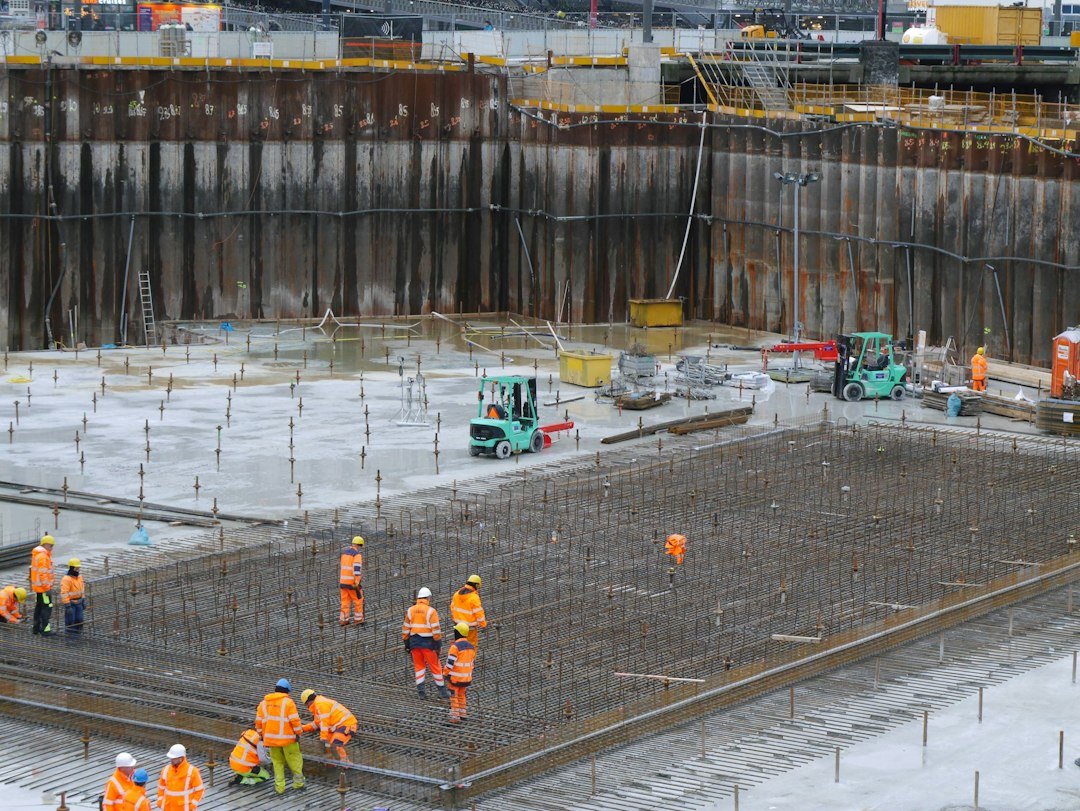
Civil reinforcement work is a critical stage in reinforced cement concrete (RCC) construction. It involves cutting, bending, placing, tying and inspecting steel reinforcement bars (rebar) as per approved structural drawings before concrete is poured. Reinforcement gives concrete the tensile strength it lacks, but the work also exposes workers to serious hazards such as impalement, cuts, manual-handling injuries, falls, lifting incidents and work at height.
This guide explains the main hazards and practical safety controls for reinforcement activities at construction sites, including foundations, columns, beams, slabs, walls and other RCC structures.
1. What are civil reinforcement activities?
Reinforcement activities generally include receiving and unloading TMT bars, stacking and storing steel, cutting bars to required lengths, bending and shaping, shifting bundles, fixing reinforcement cages, tying bars with binding wire, installing cover blocks and spacers, checking bar spacing and cover, and preparing the reinforcement for concreting.
These activities must follow approved structural drawings, bar bending schedules (BBS), method statements and project specifications. Any change in bar diameter, spacing, lap length, anchorage, cover or reinforcement arrangement must be referred to the competent engineer for approval.
2. Major hazards during reinforcement work
- Sharp edges and protruding bars: Cuts, punctures and impalement injuries from exposed rebar ends and binding wire.
- Manual handling: Back strain, muscle injury and crush injuries while lifting or shifting heavy bars and bundles.
- Mechanical cutting and bending: Entanglement, pinch points, blade contact, flying particles and electric shock.
- Material handling and lifting: Falling bundles, dropped loads, sling failure and workers being struck by suspended loads.
- Work at height: Falls from slab edges, columns, scaffolds, ladders and incomplete platforms.
- Trips and slips: Uneven ground, loose bars, binding wire, offcuts and congested access routes.
- Work near openings: Falls through floor openings or into excavations and shafts.
- Hot weather and environment: Heat stress, dehydration, poor lighting and reduced visibility.
3. Essential safety precautions for reinforcement activities
A. Before starting the work
- Prepare and brief the task-specific risk assessment/JSA and approved method statement.
- Conduct a toolbox talk covering the sequence of work, hazards, emergency arrangements and individual responsibilities.
- Ensure workers are trained and authorised for bar cutting machines, bending machines, lifting operations and work at height.
- Inspect the work area, access, lighting, housekeeping, ground condition and nearby activities before starting.
- Confirm that approved drawings and the latest BBS are available at the work location.
- Provide suitable PPE: safety helmet, safety shoes with puncture-resistant sole, cut-resistant gloves suitable for the task, safety glasses and high-visibility clothing. Add face shield or hearing protection where the risk assessment requires it.
- Establish barricades and warning signs around cutting/bending areas and lifting zones.
B. Safe unloading, storage and shifting of reinforcement steel
- Use a competent lifting supervisor, trained riggers and authorised crane/vehicle operators for mechanical handling.
- Check the weight of the bundle and ensure the lifting equipment, slings and accessories have adequate capacity and valid inspection status.
- Use suitable certified slings and proper lifting points; protect slings from sharp steel edges.
- Never stand or walk under a suspended load. Keep unauthorised persons outside the lifting exclusion zone.
- Use tag lines where appropriate to control load movement; never wrap a tag line around the hand or body.
- Stack bars on firm, level ground using adequate timber sleepers or supports. Prevent rolling with suitable chocks or restraints.
- Separate different diameters and lengths, identify the stacks and keep them clear of access routes, edges and excavations.
- Use team lifting or mechanical aids for manual handling. Plan the route and avoid sudden twisting or overreaching.
C. Safe cutting and bending of rebar
- Position cutting and bending machines on stable, level ground and protect them from rain and water ingress.
- Ensure guards, emergency stops and electrical protection are in place and functional. Do not operate a machine with missing guards or defective controls.
- Only trained and authorised operators may use the equipment. Keep hands clear of blades, rollers, gears and other pinch points.
- Inspect cables, plugs, earthing and connections before use. Use suitable industrial electrical protection and keep connections away from water.
- Use tools of the correct capacity and never exceed the machine’s rated bar diameter or operating limits.
- Keep other workers clear of the cutting line and the bar’s movement path. Control long bars to prevent whipping or sudden movement.
- Wear safety glasses and, where required, a face shield and hearing protection. Do not wear loose clothing or jewellery near rotating/moving parts.
- Isolate the power supply before clearing jams, adjusting, cleaning or carrying out maintenance. Apply lockout/tagout where required.
- Collect cut pieces and binding-wire offcuts promptly and dispose of them in designated bins.
D. Safe fixing and tying of reinforcement
- Use suitable access platforms or scaffold with complete working platforms, guardrails and safe access. Do not climb on reinforcement cages or use loose bars as steps.
- Protect exposed vertical and horizontal rebar ends with purpose-designed impalement protection. Mushroom caps alone may not provide fall-on protection unless specifically rated for that purpose.
- Maintain safe access routes through reinforcement zones. Provide secured walk boards or designed access platforms where workers need to cross reinforcement.
- Use the correct tying tools and keep binding-wire ends turned away or bent down to reduce cuts and snagging.
- Install approved cover blocks, spacers and chairs at the specified spacing to maintain concrete cover and reinforcement stability.
- Do not remove, cut, bend or reposition reinforcement without approval from the responsible engineer.
- For column and wall cages, ensure the cage is adequately supported and secured against overturning before workers approach or tie it.
- Use suitable platforms and fall protection for fixing reinforcement near slab edges, beams, columns and other elevated locations.
E. Work at height, edges and openings
- Provide edge protection, guardrails and toe boards around open slab edges and floor openings wherever practicable.
- Cover floor openings with secured, load-rated covers and mark them clearly; do not use loose sheets or unsecured boards.
- Use inspected scaffolds or approved work platforms. Ladders should be used only for suitable low-risk access tasks, not as a substitute for a proper working platform.
- Where collective protection is not practicable, use a suitable full-body harness connected to an approved anchorage/lifeline under a fall-protection plan.
- Inspect platforms and access equipment before use and after alteration or adverse conditions.
4. Inspection before concrete pouring
Before releasing reinforcement for concreting, the responsible engineer and authorised inspection team should verify the work against approved drawings and project specifications. The check should include:
- Correct bar diameter, grade, quantity, spacing and location.
- Lap lengths, development lengths, anchorage, hooks and bends.
- Concrete cover, cover blocks, spacers and reinforcement chairs.
- Secure tying and stability of the reinforcement cage.
- Cleanliness: removal of loose binding wire, offcuts, mud, oil and other debris.
- Safe access for concreting personnel and concrete-placement equipment.
- Protection of protruding bars, edges, openings and nearby workers during the pour.
Concrete should not be poured until the required inspection and approval/hold-point release have been completed. Any non-conformance must be corrected only under the direction of the responsible engineer.
5. Personal protective equipment (PPE)
Minimum PPE should be selected through the task risk assessment and site rules. Typically this includes a safety helmet, safety footwear, suitable gloves, safety glasses and high-visibility clothing. Use a face shield for operations with significant flying-particle exposure, hearing protection for noisy cutting/bending work, and a suitable harness where fall protection is required. PPE supplements engineering and administrative controls; it does not replace guarding, barricading or safe access.
6. Emergency preparedness and supervision
- Keep first-aid arrangements and emergency contact details available at the work location.
- Brief workers on the response to cuts, crush injuries, electric shock, falls and impalement incidents.
- Do not attempt to pull out an object embedded in a person after an impalement injury; stabilise it and arrange urgent medical assistance.
- Stop work and isolate equipment if unsafe conditions, defective guards, damaged electrical cables or unstable reinforcement are identified.
- Supervisors should conduct routine inspections and close out unsafe conditions before work resumes.
7. Reinforcement work safety checklist for supervisors
- JSA, method statement and toolbox talk completed.
- Approved drawings and BBS available; latest revision confirmed.
- Steel stacks stable, identified and safely located.
- Lifting gear inspected; lifting zone barricaded and controlled.
- Cutting/bending machines guarded, inspected and operated by trained personnel.
- Electrical connections protected and emergency stops functional.
- Rebar ends protected against impalement; offcuts and binding wire controlled.
- Safe platforms, edge protection and secured opening covers provided.
- Suitable PPE available and worn correctly.
- Reinforcement inspected and formally released before concreting.
Conclusion
Safe civil reinforcement work depends on proper planning, competent supervision, sound material handling, guarded machinery, safe access and systematic inspection. Every worker must understand the hazards of sharp and protruding steel, heavy bundles, cutting/bending equipment and work at height. By implementing the controls in the approved JSA and method statement, construction teams can reduce injuries while maintaining reinforcement quality and productivity.
Note: This article provides general safety guidance. Always follow applicable Indian statutory requirements, project specifications, manufacturer instructions and the site-approved risk assessment/method statement.